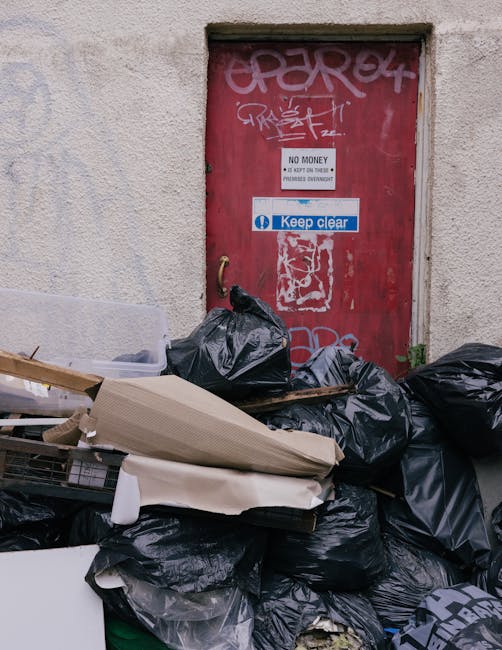
Access problems on narrow Chelsea streets and rubbish removal
Anyone who has tried to organise rubbish removal on a tight Chelsea street will know the feeling: the van cannot quite get where it needs to go, the pavement is busy, and there is always some awkward detail you only spot once the crew arrives. Access problems on narrow Chelsea streets and rubbish removal are not just a nuisance; they can affect timing, safety, pricing, and what can realistically be cleared in one visit.
That does not mean the job becomes impossible. It usually means the removal plan has to be smarter. In Chelsea, where streets can be narrow, parking is limited, and buildings often sit close to the road, the best results come from careful preparation and the right clearance method. This guide breaks down what access issues really mean, how rubbish removal works in tight spaces, what to expect, and how to avoid the classic mistakes that cause delays.
Why access problems on narrow Chelsea streets and rubbish removal matters
Chelsea is one of those places where the street itself can shape the whole waste clearance job. Terraces sit close together, bays fill quickly, and a driveway is not always available. On a calm morning it may look straightforward, then a delivery lorry, a school run, or a parked car changes the picture. That is the reality of rubbish removal in a dense London neighbourhood.
Access matters because it affects three things at once: safety, speed, and cost. If a crew cannot park close enough to the property, more hand carrying is needed. If a road is too narrow for safe loading, the crew may need to work from a different point. And if bulky items have to be moved further, the clearance may take longer than expected. Simple enough, really, but it catches people out all the time.
There is also the neighbour factor. Narrow streets mean that one blocked pavement can affect everyone. A poorly planned collection can create noise, congestion, and a bit of irritation all round. Nobody wants to be the person who leaves a sofa halfway across the pavement on a Tuesday lunchtime. Not ideal.
For householders, landlords, builders, and local businesses, the practical takeaway is clear: access is part of the job brief, not an afterthought. If you treat it as a major planning point from the start, you are far more likely to get a smooth collection. If you do not, the clearance can become one of those jobs that spirals for no good reason.
Expert summary: In narrow Chelsea streets, successful rubbish removal usually depends less on the size of the waste and more on how well the access is planned before the crew arrives.
How access problems on narrow Chelsea streets and rubbish removal works
The process is usually more practical than people expect. A good clearance team will look at the access route, not just the rubbish itself. That means checking where the vehicle can stop, whether there is room to load safely, whether items need to be moved through a hallway or stairwell, and whether any permits, time restrictions, or neighbour constraints need to be considered.
In Chelsea, the key challenge is often the final few metres. A van may not be able to park directly outside, or there may be limited room to unload. In those cases, clearance is done in stages. Items are carried from the property to the vehicle using trolleys, lifting techniques, and a route that avoids blocking entrances. Sometimes the safest option is a smaller vehicle rather than one large lorry. Sometimes it is simply a matter of timing the job well.
This is where planning beats guesswork. You might think, "It's just a couple of wardrobes and some garden waste." But once those items meet a narrow staircase, a sharp bend, or a blocked street, the picture changes. The crew has to protect walls, door frames, floors, and other people using the street. That is why professional rubbish removal is less about brute force and more about controlled movement.
If you are arranging a full property clearance, it can help to look at related services such as home clearance or house clearance, especially where multiple rooms or bulky items are involved. For smaller spaces, a flat clearance can be more appropriate. The right service depends on the access route as much as the volume of waste.
There is also a difference between rubbish removal and general decluttering. Some jobs involve loose black bags, cardboard, and mixed waste. Others involve one or two large items that are awkward rather than heavy. Knowing the difference helps you plan the vehicle, labour, and disposal route more accurately. It sounds small, but it saves a lot of back-and-forth later.
Key benefits and practical advantages
When access is handled properly, the benefits show up immediately. The job feels calmer, the crew can work safely, and you are less likely to run into delays. That is true whether you are clearing a mews property, a townhouse, a basement flat, or a small commercial unit tucked behind another building.
- Faster collections: Planning the loading point and route in advance reduces wasted time.
- Less risk of damage: Narrow hallways, railings, and painted walls are protected more carefully when the route is known.
- Cleaner street management: Items are not left in exposed or awkward positions for longer than needed.
- Better labour planning: Teams can bring the right number of people and the right handling equipment.
- More accurate quotes: Access conditions can be factored in honestly, rather than guessed.
- Lower stress for residents: You are not trying to improvise on the day while someone stands there checking a parking bay. Nobody enjoys that.
There is another benefit people overlook: better recycling outcomes. If items are sorted sensibly during collection, more of the load can be separated for reuse or recycling. A well-run service such as recycling and sustainability is not just about good intentions; it is about reducing unnecessary disposal wherever possible.
For business customers, the advantage is even more practical. Offices, shops, and worksites in Chelsea often have to keep operating while waste is removed. Good access planning means less disruption at the door, fewer interruptions for staff, and less risk of upsetting customers. If the waste comes from commercial premises, business waste removal can be a better fit than a one-size-fits-all collection.
Who this is for and when it makes sense
This topic is relevant to a surprisingly wide mix of people. You do not need a huge renovation project to run into access trouble. In Chelsea, even a modest clearance can become tricky because of the street layout.
You are likely to need a more considered rubbish removal plan if you are:
- a homeowner clearing loft, garage, or spare-room clutter
- a tenant moving out of a flat with narrow stairs or no lift
- a landlord preparing a property between tenancies
- a decorator or builder with waste piling up close to a small frontage
- a local office manager dealing with desks, chairs, packaging, and mixed waste
- someone clearing furniture from a property where parking is already tight
- a garden owner dealing with soil, branches, and green waste access issues
It also makes sense whenever you have items that are awkward rather than just numerous. A single sofa on a narrow staircase can be harder to move than ten bags of general waste. A heavy wardrobe with no lift? Same story. Truth be told, bulky furniture is often the real headache.
If your job involves old seating, cabinets, beds, or office items, related pages such as furniture clearance, furniture disposal, and office clearance may be useful to consider, depending on what is being removed and from where.
There is also the "half-clearance" situation. Maybe you are not emptying the whole property, just removing builders' rubble from the rear, a stack of old furniture from the lounge, and some loft bits that have been sitting there since forever. In those mixed cases, good access planning becomes even more valuable because different materials may need different handling routes.
Step-by-step guidance
Here is the practical way to approach access problems on narrow Chelsea streets and rubbish removal without making it harder than it needs to be.
- Look at the access route first. Check the street width, parking options, entry points, stairs, lift access, and any tight corners inside the property.
- Identify the heaviest and most awkward items. Sofas, mattresses, wardrobes, fridges, and broken builders' waste all behave differently when moved.
- Measure where necessary. Door frames, stair width, landing space, and vehicle access points can all matter. A few minutes with a tape measure can save a whole lot of faff.
- Note any restrictions. Busy times, school hours, neighbours' access, loading limits, and local parking pressures should be taken into account.
- Separate waste types. General rubbish, garden waste, furniture, and builders' waste may need different handling or disposal arrangements.
- Share clear information before collection day. Photos are very helpful. So are notes about stairs, basements, rear access, or locked gates.
- Prepare the items for easier loading. Remove loose contents, disconnect appliances only if it is safe to do so, and keep the route clear.
- Confirm the collection plan. Make sure you know who will arrive, roughly where they will park, and how the team will access the property.
If you are unsure what kind of clearance you need, services like waste removal can be a broad starting point, while more specific jobs may be better matched to builders waste clearance or garden clearance.
One small but useful habit: walk the route yourself the evening before. You will notice the wobble in a loose gate, the box someone left on the landing, the bike leaning across the hallway. Those tiny things can become the thing, especially on a tight street.
Expert tips for better results
Here is where a bit of experience pays off. The best access solutions are rarely dramatic. They are mostly about removing friction before the crew turns up.
- Use photos instead of vague descriptions. "It's a narrow street" means very little on its own. A photo shows the turning space, pavement width, and nearby obstacles.
- Be specific about floor level. Ground floor, basement, first floor, top floor with steep stairs - these are not interchangeable.
- Keep the access route tidy. A hallway full of shoes, prams, and spare boxes can turn a simple job into a careful shuffle.
- Ask about smaller-vehicle options. In some Chelsea streets, a nimble van is simply a better fit than a larger truck.
- Plan around traffic peaks if possible. A job at 7.30 a.m. may feel very different from one at midday.
- Protect finishes. Old townhouses and flats can have fragile corners, polished floors, and narrow doorways. Dust sheets and corner protection are worth it.
For furniture-heavy jobs, separating what can be reused from what must go is sensible. It often reduces handling time and makes the collection feel less cluttered. For larger household projects, loft clearance and garage clearance can be relevant if the access route is awkward but the waste is concentrated in one area.
Another tip: do not underestimate stair corners. Everyone thinks about the front door, but the stair turn is where shoulders catch, wardrobes snag, and tempers rise a bit. That's the real pinch point more often than not.
Common mistakes to avoid
The same errors show up again and again on access-limited jobs. They are easy to make, which is why they are worth naming clearly.
- Assuming access is "fine" without checking it. A street that looks manageable on foot may be poor for loading.
- Forgetting parking pressure. If the vehicle cannot stop nearby, the whole schedule changes.
- Underestimating bulky items. One large sofa can be harder than several smaller bags.
- Not mentioning stairs, lifts, or basement access. This is one of the most common reasons for day-of surprises.
- Leaving waste mixed together without any thought. It can slow sorting and affect what is reusable or recyclable.
- Blocking hallways right up to collection time. If the route is not clear, the crew cannot work safely or efficiently.
There is also a communication mistake: giving only part of the picture. If the street is narrow but there is rear access through a mews alley, say so. If the front is difficult but the lift is working, say so. If the lift has been out of order for two weeks, say that too. The more complete the picture, the better the plan.
And yes, people do sometimes forget the obvious one: "Where is the rubbish actually coming from?" A flat with no lift and a second-floor office are not the same beast. Same city, different headache.
Tools, resources and recommendations
You do not need a mountain of specialist kit to deal with access problems, but the right practical tools make a real difference. For crews, that may mean sack trucks, furniture dollies, protective blankets, lifting straps, and appropriate gloves. For customers, it means having a tape measure, a few photos, and a clear idea of what needs moving.
Useful recommendations include:
- Measure key pinch points: door widths, stair turns, lift dimensions, and any rear gate gaps.
- Photograph the route: one photo of the waste is useful, but a few photos of the route are often more valuable.
- Separate fragile items early: glass, mirrors, and awkward furniture need more care.
- Use labels where practical: especially in offices, garages, and lofts where mixed items build up over time.
- Keep details in one place: who is letting the crew in, whether there is a concierge, and where the vehicle should wait.
If you are trying to get a handle on cost, the page on pricing and quotes is a sensible place to look before booking. That said, access conditions can change the picture, so a quote based on a proper description is always more useful than a rough guess.
For people who like to understand the company side of things before booking, about us can help with trust and background, while insurance and safety is worth checking when the job involves tight spaces, heavy items, or shared access areas.
Law, compliance, standards, or best practice
For rubbish removal in London, the safest approach is to work to recognised UK waste-handling expectations and common-sense site practice. That means waste should be handled responsibly, transported safely, and taken to appropriate disposal or recovery routes. You do not need to be a legal expert to understand the basics, but you do need to avoid shortcuts.
In practical terms, best practice usually includes:
- keeping pathways clear enough for safe movement
- avoiding obstruction of public access where possible
- using suitable manual handling methods for heavy or awkward waste
- separating waste streams where practical
- handling any potentially hazardous items with extra care
- working in line with normal environmental and safety expectations
If a job is taking place on a public street, parking, loading, and pedestrian access may need extra attention. In Chelsea, that is not a minor detail. Narrow roads and busy footfall mean that even a short loading stop should be planned properly. You want the job done cleanly, not with half the pavement blocked while everyone side-steps around a mattress.
Customers should also check service terms and payment conditions before the collection, especially where access is uncertain or the job could change on arrival. The pages on terms and conditions, payment and security, and complaints procedure can help set expectations in advance. That is just sensible, frankly.
For businesses handling sensitive or client-facing premises, a clear waste process is also part of good operations. If you are working from an office, shop, or shared building, good access planning reduces disruption and shows care for the site. Small thing, big impression.
Options, methods, or comparison table
There is more than one way to handle rubbish removal on a narrow street. The best method depends on the load, the building, and how much access you actually have. Here is a simple comparison.
| Method | Best for | Pros | Watch-outs |
|---|---|---|---|
| Full vehicle collection | Larger clearances with reasonable roadside access | Efficient for mixed loads; fewer trips | May be unsuitable on very narrow streets or where parking is tight |
| Smaller van or split-load collection | Restricted Chelsea streets, flats, and mews properties | More flexible; easier to position safely | May need extra time or repeat runs |
| Room-by-room clearance | House, flat, loft, or office clearances | Organised; easier to keep routes clear | Requires more preparation inside the property |
| Item-focused removal | Single furniture items or bulky pieces | Simple and fast if access is planned well | Large items can still be tricky on stairs or tight corners |
| Specialist waste removal | Builders' debris, mixed project waste, or commercial loads | Better handling and disposal planning | Needs accurate description in advance |
For building-related jobs, builders waste clearance is often the better match. For garden projects, garden clearance makes more sense. And when the job is mostly home clutter rather than construction waste, a broader home clearance can be the right fit.
Case study or real-world example
Picture a typical Chelsea scenario. A first-floor flat needs clearing after a move, and the street outside is too narrow for long parking. There is a sofa, two armchairs, a bed base, several bags of mixed household waste, and a couple of old lamps. Nothing dramatic. Just enough to be annoying.
The first issue is the staircase. It has a tight turn halfway down, and the sofa is longer than it first looked in the sitting room. The second issue is road access. The vehicle cannot sit directly outside for long, so the team has to work in a short loading window. By checking the access route first, measuring the sofa, and separating the smaller items into manageable bags, the crew can plan the move properly instead of discovering the problem in the hallway.
In this kind of job, the best outcome is usually a staged approach: smaller items out first, bulky pieces handled with more care, and the vehicle loaded efficiently once the route is clear. Nothing flashy. Just good planning, a steady pace, and a bit of patience.
That is what access-aware rubbish removal really looks like in practice. Not magic. Just competence.
Practical checklist
Use this before booking or collection day. It keeps things simple.
- Have you checked the street access and parking situation?
- Do you know whether the vehicle can stop near the property?
- Have you measured doors, stairs, and any awkward turns?
- Have you told the crew about basements, lifts, rear entrances, or shared hallways?
- Are bulky items listed clearly, not just "general rubbish"?
- Have you separated items that may be reused, recycled, or disposed of differently?
- Is the access route inside the property clear of clutter?
- Do you have contact details for the person meeting the crew?
- Have you checked the service terms and payment details?
- Are you clear about whether the job is household, office, builders, or furniture clearance?
If you are still unsure, take a few photos and send them with a short note. It is one of the easiest ways to avoid confusion. Honestly, it saves everyone time.
Get a free quote today and see how much you can save.
Conclusion
Access problems on narrow Chelsea streets and rubbish removal are part planning issue, part logistics issue, and part good communication. Once you accept that access is central to the job, everything becomes easier. The right vehicle, the right timing, the right route, and the right type of clearance can turn a stressful collection into a tidy, well-run visit.
Whether you are clearing a flat, removing a few bulky items, or managing a larger home or business job, the safest approach is the same: describe the access clearly, prepare the route, and choose the method that fits the street rather than fighting it. Chelsea has its quirks. That is fine. With a bit of thought, the job still gets done properly.
And when it is done well, you notice the best part last: the street quiet again, the hallway clear, and that pleasing little sense that one more thing has been sorted.
Frequently Asked Questions
What counts as an access problem on a narrow Chelsea street?
It usually means the vehicle cannot stop close to the property, the pavement or road is too tight for easy loading, or the waste has to be carried a long way from the building. Stairs, basements, mews lanes, and shared entrances can all make the job more complicated.
Can rubbish removal still be done if the van cannot park outside?
Yes, often it can. The team may use a smaller vehicle, carry waste from a nearby loading point, or adjust the collection plan. The key is giving accurate access details before the job starts.
Do narrow streets make rubbish removal more expensive?
They can, depending on the amount of extra labour, distance carried, and time needed. That is not always the case, but restricted access often means the quote has to reflect the real conditions rather than a standard easy-access collection.
What information should I give before booking?
Tell the provider about street width, parking, stairs, lifts, floor level, rear access, and the type of waste involved. Photos are very helpful too. A quick image can explain more than a long message, to be fair.
Is a flat clearance different from general rubbish removal?
Usually, yes. A flat clearance is more about removing contents from an indoor space, while rubbish removal can be broader and may include mixed waste, loose bags, or outdoor items. On narrow streets, the access plan matters either way.
What should I do if I live in a building with a very tight staircase?
Measure the largest items carefully and tell the clearance team in advance. In some cases, items may need to be dismantled, moved in sections, or removed by a different route. Guessing is rarely a good idea here.
Can builders' waste be removed from tight Chelsea streets?
Yes, but it needs careful handling. Builders' waste can be heavy, dusty, and awkward in bags or rubble sacks. A service like builders waste clearance is usually better suited than a basic general collection.
How can I make the collection faster on the day?
Keep the access route clear, group items together, label what is going, and make sure the crew knows where to enter. If possible, move smaller loose items out of the way before arrival. It sounds obvious, but it helps a lot.
What if I also have furniture to remove?
Say so early. Furniture needs different handling from loose waste, especially on stairs and in narrow hallways. Furniture clearance or furniture disposal may be the better match if most of the load is bulky household items.
Is recycling possible when access is limited?
Yes, it often is. Good planning helps the crew separate materials properly and keep reusable or recyclable items out of the general waste stream where practical. Access difficulty does not automatically mean poorer recycling.
Do I need to be present for the clearance?
In many cases, yes, especially if access is restricted or the team needs someone to confirm the route, keys, or what stays and what goes. If you cannot be there, arrange clear instructions in advance and make sure someone responsible is available.
What is the best first step if I am unsure about access?
Take photos of the street, entrance, stairs, and the waste itself, then ask for advice before booking. That one step can prevent most day-of surprises. It is simple, and honestly, it works.